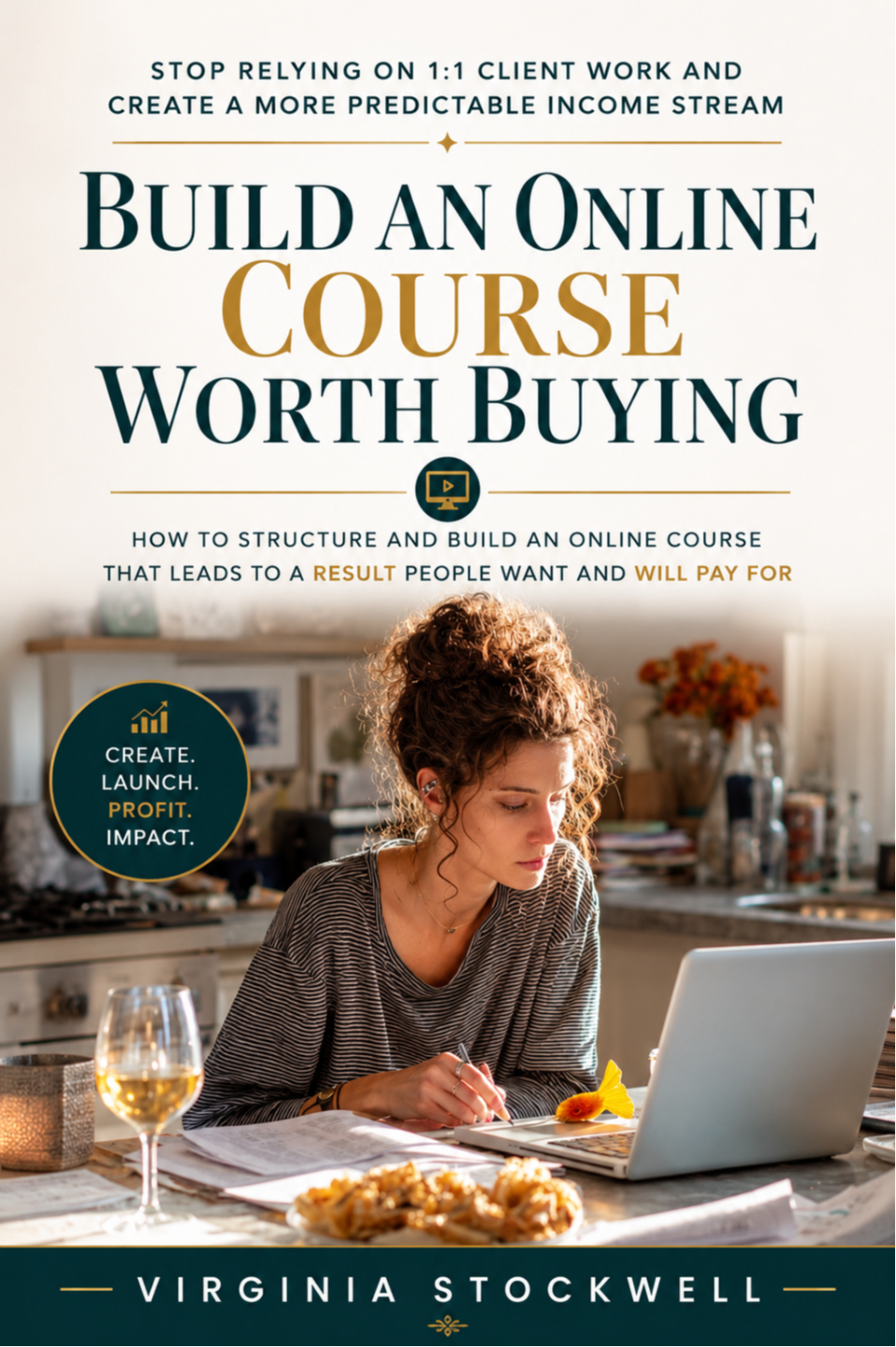
How Can I Turn a Book I Wrote Into an Online Course?

Yes, you can turn a book into an online course. The key is not copying the book into video form, but restructuring it around transformation and implementation.
This question usually comes up after someone has already written a book and wants to create a higher-ticket offer without starting from scratch.
Step 1: Define the Transformation
Your course should move learners from point A to point B.
Point A is where they are now.
Point B is who they become after applying your framework.
Instead of asking, “What chapters do I have?” ask:
-
What identity shift happens?
-
What skills are acquired?
-
What result is achieved?
Your book explains information.
Your course must deliver transformation.
Describe the new identity clearly. That identity becomes the foundation of your course structure.
Step 2: Break the Book Into Modules
Divide your book into logical sections.
Each major section can become a course module.
Each chapter can become a lesson.
However, not every chapter needs to be a video.
Some chapters may become:
-
Worksheets
-
Templates
-
Case studies
-
Bonus resources
Courses should focus on action, not repetition of text.
Step 3: Create a Script (But Don’t Read the Book)
You do not need to read your book on camera.
Instead, create:
-
Bullet-point outlines for conversational delivery
-
Or a light transcript to stay structured
Adapt your written content for spoken clarity.
Video content should feel:
-
Direct
-
Clear
-
Structured
-
Practical
If it sounds like you are reading, it will feel disconnected.
Step 4: Plan the Visual Experience
Decide how you want to present the material.
Options include:
-
Slides
-
Screen share demonstrations
-
Live examples
-
Talking head videos
Slides help simplify frameworks.
Screen shares are ideal for software or tactical steps.
Talking head builds connection.
The goal is clarity, not production complexity.
Step 5: Filming Approach
Beginner setup:
-
Phone or DSLR camera
-
Tripod
-
Ring light
-
Quiet room
Maintain eye contact with the camera and speak naturally.
Advanced setup:
-
Multiple camera angles
-
Professional lighting
-
Edited b-roll
-
Video editor support
High production quality does not automatically justify higher pricing. Clear transformation and structure matter more than camera type.
Lighting and audio quality matter more than camera brand.
Step 6: Edit for Clarity
Edit out:
-
Long pauses
-
Repetition
-
Off-topic commentary
Add:
-
On-screen text for key points
-
Clean transitions
-
Simple visuals
Free tools like Shotcut can handle basic editing needs.
Step 7: Add Interactive Elements
Courses perform better when learners apply what they learn.
Consider adding:
-
Worksheets
-
Quizzes
-
Action steps
-
Email reminders
-
Discussion prompts
Engagement increases completion rates and perceived value.
Step 8: Create Supplementary Materials
Your book becomes the foundation for:
-
Downloadable checklists
-
Templates
-
Swipe files
-
Transcripts
These materials increase course value without requiring new content creation.
Common Mistake to Avoid
Do not turn every paragraph into a video.
A book delivers information.
A course delivers structured implementation.
Focus on:
-
Clear modules
-
Action steps
-
Defined outcomes
Where This Fits in the Process
This question typically comes up after publishing a book but before building a sales funnel around a course offer. The next decision most people face is how to price and package the course version of their intellectual property.
FAQ
Do I need to rewrite my entire book for a course?
No. You need to restructure it for implementation and spoken delivery, not rewrite it completely.
Can I charge more for a course than for a book?
Yes. Courses typically include video guidance, structure, and implementation support, which increases perceived value.
Should I include the full book inside the course?
You can include it as a bonus or reference material, but the course should stand on its own as a guided experience.
Do I need professional filming equipment?
No. Clear content, strong lighting, and good audio are more important than camera type.