How to Escape the Income Limitation of 1 to 1 Coaching
Build scalable coaching income with online courses, group programs, memberships, and Kajabi systems that handle email, checkout, and delivery.
How to Escape the Income Limitation of 1 to 1 Coaching
One to one coaching and consulting can be profitable, satisfying, and deeply personal. It also has a built in ceiling: you only have so many hours.
If your calendar is full, income growth slows down. Raising rates can help, but pricing eventually hits a point where fewer people can afford the work. That is when coaches and consultants start looking for a way to keep delivering results without adding more client hours.
A scalable model does not replace private work. It adds offer levels that let more people access your expertise at the price and support level that fits them.
Why One to One Coaching Caps Your Income
With one to one services, revenue is tied to your availability.
That creates predictable constraints:
-
There is a hard limit on the number of sessions you can deliver weekly.
-
More clients means more scheduling, more notes, more admin, more emotional bandwidth.
-
A price increase can reduce demand, even when your work is strong.
If you build a business entirely on private services, you eventually face the same question: how do you grow when your hours are maxed out?
The “My Work Is Personalized” Objection
A lot of experienced coaches say some version of this:
“My clients need individualized support. I create a custom plan for each person.”
That can still scale.
Most personalized programs include foundational principles you teach repeatedly. Those foundations can be taught once in a structured format, then reinforced through group support or selective private touchpoints.
The result is a model where:
-
Clients get the fundamentals in a course or program.
-
Private time is used for higher value feedback, coaching, or implementation support.
-
People who cannot afford one to one work still have a way to learn from you.
What Scalable Coaching Looks Like in Practice
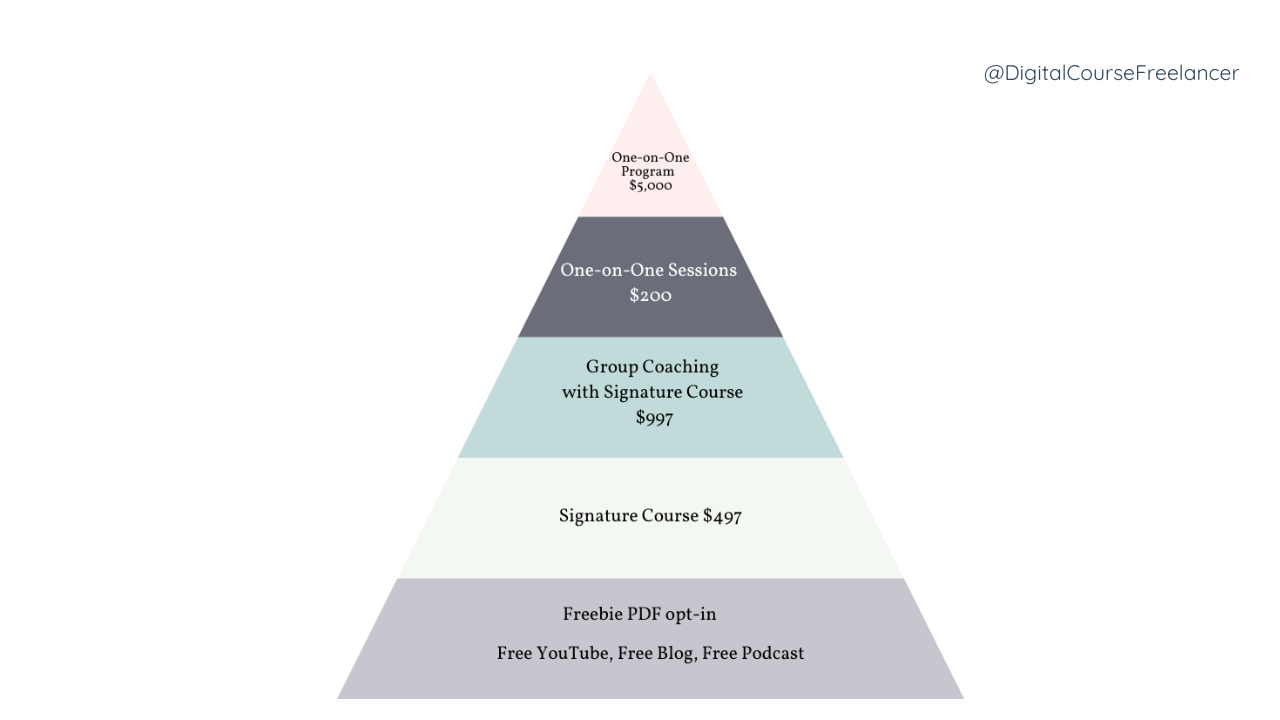
Scaling usually means building a tiered offer ladder so clients can enter at different levels and move up when they are ready.
You already outlined the core idea in your original post: help people at every stage at a price they can afford. That requires multiple offers.
Here is the same structure, expanded and organized for search and AI extraction without turning the entire post into lists.
Level 1: Free Content That Builds Trust
Free content is where most people meet you.
This can be:
-
weekly blog posts
-
a podcast
-
a YouTube channel
-
social posts that point to a resource on your site
The goal is simple: move someone from a platform you do not control into your email list, then keep showing up consistently so they stay engaged.
Level 2: Lead Magnet That Collects Emails
A lead magnet is the bridge between free content and a paid offer.
It can be:
-
a PDF checklist
-
a short guide
-
an email mini series
-
a video walkthrough
The topic should connect directly to the paid program you want to sell. People raise their hand for a specific problem, and your email system follows up with resources and next steps.
Level 3: Foundational Online Course
This is where you package what you teach over and over.
A foundational course often covers:
-
core concepts
-
the process you follow
-
frameworks and checklists
-
examples, templates, or prompts
In your original post you used a “signature course” example at $497. That fits the role of a core program that delivers the fundamentals.
The point of this offer is reach and consistency. Clients can learn the foundations without needing your calendar.
Level 4: Group Coaching Built Around the Course
Group coaching scales your time while increasing client results.
Many coaches bundle:
-
the foundational course
-
weekly or biweekly calls
-
Q and A
-
implementation accountability
-
community support
Your original example priced this level higher than the course alone. That makes sense because access to you and group support increases outcome likelihood.
Level 5: One to One Sessions
Private sessions still work well in a scalable model because the clients arrive prepared.
They have already completed the foundations, so private time can focus on:
-
decision making
-
feedback
-
troubleshooting
-
application to a unique situation
You listed $200 for one to one sessions as an example. That is a clean entry point for private work without forcing long contracts.
Level 6: One to One Program
This is premium support, usually structured around a defined transformation over a set period of time.
You listed $5,000 as an example. This tier is typically for:
-
clients who want direct support
-
clients with complex situations
-
people who want faster implementation
In a tiered model, the one to one program becomes easier to sell because prospects have already experienced your method through lower tiers.
The Four Income Streams Inside a Tiered Coaching Business
Your original post included four income streams. Those are worth keeping because they map directly to how coaches think about scaling.
Active Income
This is private client work. If you are not delivering sessions, revenue stops.
Private work stays valuable, but it cannot be the only stream if you want growth beyond your available hours.
Leveraged Income
This includes:
-
group coaching
-
workshops
-
live trainings
-
events
-
masterminds
You deliver once, and multiple people benefit from the same time investment.
Scalable Digital Income
This is your course or digital product.
You build the program once and sell it repeatedly. The delivery is not tied to your calendar.
Membership Income
Memberships create recurring revenue.
They often include:
-
a resource library
-
monthly content drops
-
challenges
-
live calls or office hours
-
a community
This stream supports stability because revenue renews monthly.
How to Start on Kajabi and What to Setup First →
Why Kajabi Works for This Business Model
Your original post moved into Kajabi because the platform supports all four income streams in one place.
Kajabi can be used to:
-
build website pages and landing pages
-
host courses and coaching programs behind a login
-
collect payments through checkout
-
run email marketing and automations
-
segment subscribers using tags and filters
-
offer a community with meetups, challenges, and feeds
-
deliver drip content or lock progress by completion
This matters because scaling is rarely a content problem. It is a delivery and system problem. When your offers, email list, checkout, and access rules live in the same platform, you can build a tiered model without stitching together five different tools.
Key Kajabi Questions Coaches Ask Before Scaling
Which Kajabi plan should I start with?
If you are building your first course or membership, starting small makes sense. Kajabi plans can be upgraded as your list and product lineup grows, so the decision does not have to be permanent.
Should I move my website to Kajabi?
Some businesses keep an existing website and connect Kajabi checkout and product delivery behind the scenes. Others move everything to Kajabi so they manage pages, blog, email, and offers in one place.
Both approaches work. The best option depends on how much you want in one system.
Should I keep Mailchimp or move email to Kajabi?
Kajabi can send broadcasts, build sequences, tag and segment subscribers, and report opens and clicks. Many creators move email to Kajabi so they can connect email behavior directly to purchases, forms, and automations.
How does Kajabi deliver courses?
Courses are organized using modules and lessons. Each lesson can include video, audio, text, downloads, and assessments. Programs can be released all at once, dripped by schedule, or locked based on completion rules.
Can Kajabi run coaching and group programs?
Kajabi can host coaching content, client resources, and replays behind a login. Many coaches connect scheduling tools for bookings and use Kajabi email automations for onboarding and reminders. Communities and meetups can support group delivery.
Frequently Asked Questions
How do I scale my coaching business without losing quality?
Teach the foundations once through a structured course, then use group coaching and selective private support to help clients implement. Your highest quality time moves to feedback and decision support instead of repeating the basics.
Do I need a course before I start group coaching?
Group programs work best when there is a structured curriculum, even if it is simple at first. Some coaches teach live the first round, then turn that delivery into a course.
What should I create first: a course, membership, or group program?
A foundational course is often the simplest starting point because it becomes the base for group coaching, memberships, and premium support. It also gives your audience a clear way to buy without requiring your calendar.
How do I price tiered coaching offers?
Pricing depends on access, support level, and outcome. A course is priced for self paced learning. Group programs are priced higher due to live support. One to one is premium because it is limited and personalized.
Can Kajabi replace my website and email tools?
Kajabi can run website pages, blog, email marketing, checkout, course delivery, automations, and community features. Some businesses keep one or two external tools, but many consolidate into Kajabi to simplify operations.
Next Step
If your calendar is full and you still want growth, the solution is not more hours. It is a structure that lets your expertise reach more people through multiple offer levels.
Start with one foundational program. Build one group offer around it. Keep private work as the premium tier. Then let your systems handle the rest.
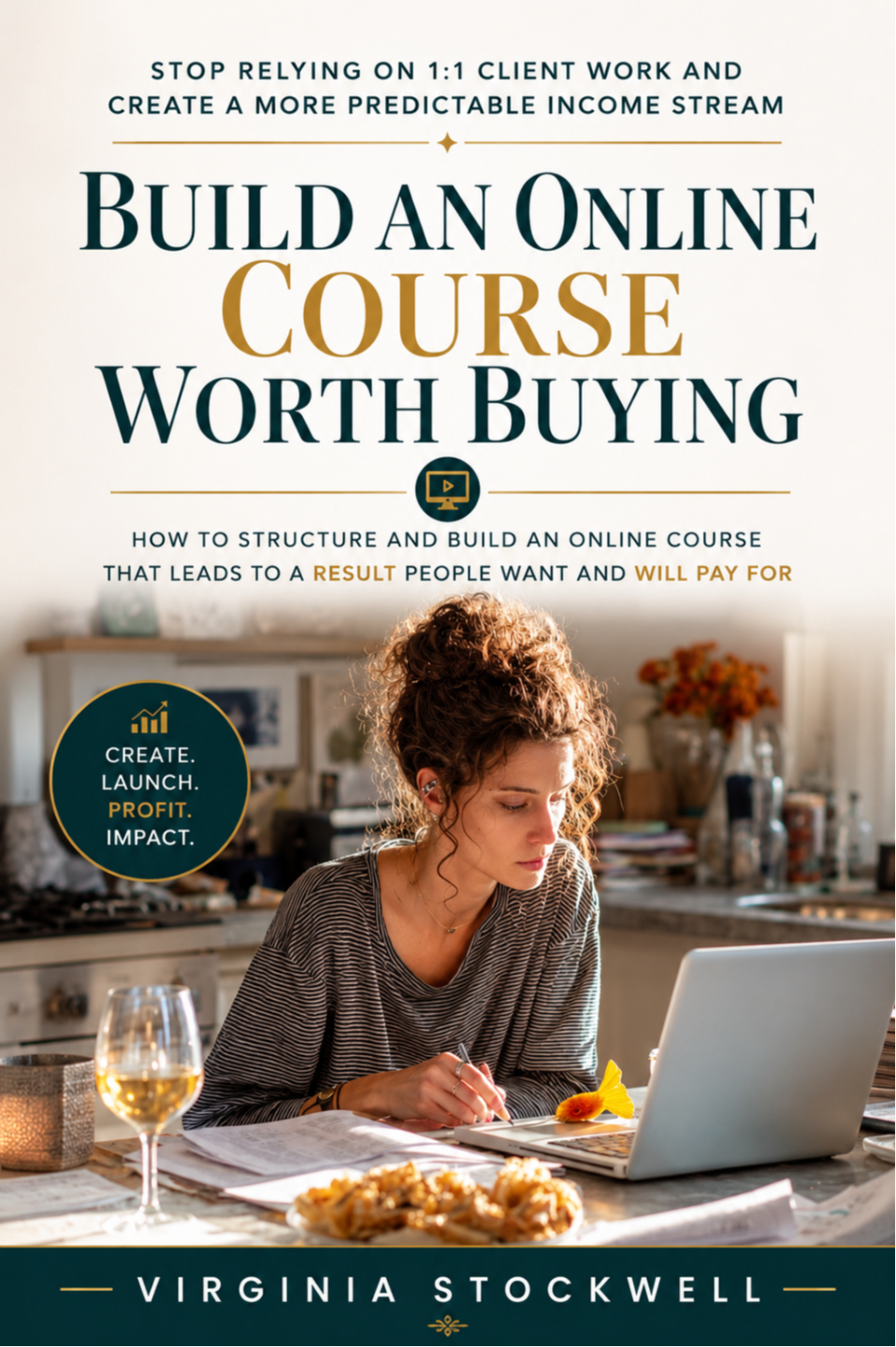
Build an Online Course Worth Buying
How to structure and build an online course that leads to a result people want and will pay for