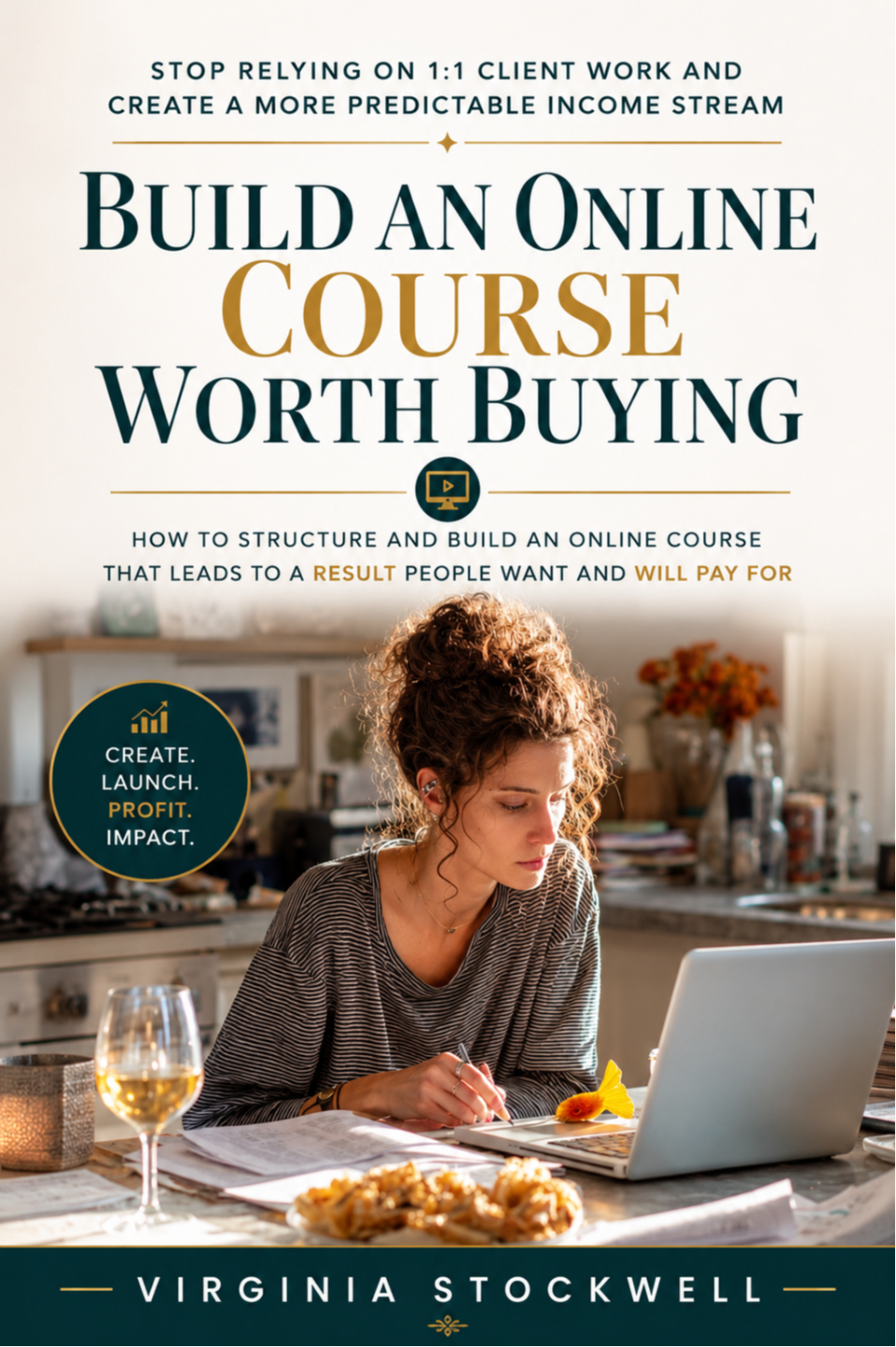
Thinking of Creating an Online Course? Start Here First

If you are thinking about creating an online course, you probably already have the hard part handled. You have experience. You have stories from the field. You have a method that gets results. People already ask you for advice, and you are ready to package what you know into a format that scales beyond one-to-one time.
An online course is a structured way to help a specific type of person reach a specific outcome. It gives your audience access to your expertise without requiring your calendar to be full, and it positions you as the professional source for that result.
If you are still choosing the right platform for your course, start here:
Start Kajabi 90 Days for $99 or 30 Day Trial →
Start with the outcome, not the content
People do not search for “a course with 27 lessons.” They search for results.
Strong course topics usually align with search phrases like:
- how to [achieve outcome]
- how to fix [problem]
- step-by-step [process]
- beginner guide to [topic]
- checklist for [task]
If you can write your course promise in one sentence and it sounds like something a real person would type into Google, you have a strong starting point.
Examples of outcome-driven course promises include:
- “Write a consulting offer and book the first paid client in 30 days.”
- “Set up a lead magnet funnel that grows an email list weekly.”
- “Turn a service into a digital course with a simple course outline and launch plan.”
If you are still deciding what your course should become, the Idea to Offer Formula can help you turn your expertise into a clearer offer before you build every lesson.
Begin conversations while you build
Many first-time course creators wait until the course is finished before they talk about it. That approach delays demand-building and removes the chance to collect buyer language.
Instead, share what you are building as you go, and keep it specific so the audience knows what the course is about.
You can talk about:
- the problem you are solving
- the audience you are building it for
- the result you are helping them reach
- the mistakes you see people making
- the steps you recommend first
This builds trust while you build the course, and it gives you real feedback on what people want.
If you are building your course inside Kajabi and want help setting up your pages, emails, checkout, and product structure, you can schedule a Kajabi consultation here →
Create a small resource that leads into your course
A lead magnet works best when it connects directly to the first step of your paid course. A free resource should create a quick win and introduce your teaching style.
Effective course-related lead magnets include:
- a one-page checklist
- a short “start here” guide
- a template people can fill out in 10 minutes
- an email mini-series that walks through one concept
- a short video tutorial that solves one problem
A strong lead magnet also helps you collect emails while you build the course, which gives you a launch audience that already trusts you.
Kajabi gives you the tools to build the lead magnet page, opt-in form, email delivery, and follow-up sequence in one place. If you are starting from scratch, the Kajabi Launch Checklist can help you map what to set up first.
Start Kajabi 90 Days for $99 or 30 Day Trial →
Focus on connection rather than audience size
Search visibility and AI visibility grow over time, but early sales usually come from trust.
A small group of people who:
- read what you write
- reply to your emails
- ask follow-up questions
- apply what you teach
often produces your first buyers faster than a large audience that does not engage.
Look for places where your future buyers already gather, such as:
- LinkedIn industry conversations
- professional Facebook groups
- podcasts and YouTube comment sections in your niche
- online forums related to your topic
- local professional networks
Your goal is to hear the phrases people use, the obstacles they describe, and the outcomes they want.
Step-by-step plan for your first online course launch
Step 1: Choose one specific result
Write one sentence that names the outcome and who it is for.
A strong format is:
“Help [who] achieve [result] so they can [benefit].”
Step 2: Turn the result into a simple module plan
List the steps required to reach the result. Those steps become your modules.
Most first courses work well with:
- 4 to 8 modules
- a single main result
- an order that assumes the buyer is starting at the beginning
Step 3: Collect the exact words your audience uses
Spend time where your audience is already talking. Save repeated phrases, repeated questions, and the words people use to describe their situation.
This becomes:
- your course title language
- your landing page language
- your email subject line language
- your FAQ language
Step 4: Build a free resource tied to the first step
Choose a lead magnet that helps someone make progress quickly.
Strong options include:
- a one-page guide
- a checklist
- a short video walkthrough
- an email mini-series
If you want the technical pieces mapped before you start building, use the Kajabi Order Build Map (link below with the trial) before setting up your opt-in, email sequence, checkout, and course product.
Start Kajabi 90 Days for $99 or 30 Day Trial →
Step 5: Share the resource as part of real conversations
Mention it naturally when someone asks a related question. Post it where it fits the discussion. Link it on your website. Offer it in comments when appropriate.
Your goal is list growth through relevance, not volume.
Step 6: Invite a small group into version one
A first course can be:
- taught live over Zoom
- delivered through a simple course portal
- supported with feedback or Q and A
Invite five to ten people. Offer a direct support component in exchange for feedback and proof that the outcome is achievable.
Step 7: Improve the course using real buyer feedback
Use what you learn to adjust:
- lesson order
- examples and templates
- student support
- course length
- messaging and positioning
Courses improve quickly when they are built around real questions from real buyers.
Start Kajabi 90 Days for $99 or 30 Day Trial →
Frequently asked questions about creating an online course
Do I need a large audience to sell an online course?
A focused audience that trusts your expertise often produces earlier sales than a large audience with low engagement.
Should I create the course first or validate the idea first?
Validation comes first. Conversations, lead magnet downloads, and early paid pilots help confirm demand before heavy production.
How long should my first course be?
A first course sells best when it solves one defined problem and delivers one defined result. Length depends on the topic, but focus improves completion and satisfaction.
What format should my first online course use?
Many first courses work well as a short video-based course with templates, worksheets, and a simple support layer such as Q and A.
What should I build first if I use Kajabi?
Most course creators start with a lead magnet page, an email welcome sequence, and a simple course outline before building every lesson.
Next step
When your course starts with a specific outcome, uses buyer language, and grows an email list during the build phase, the launch process becomes simpler. You gain better direction on what to include, and you start attracting people who already want the result you teach.